
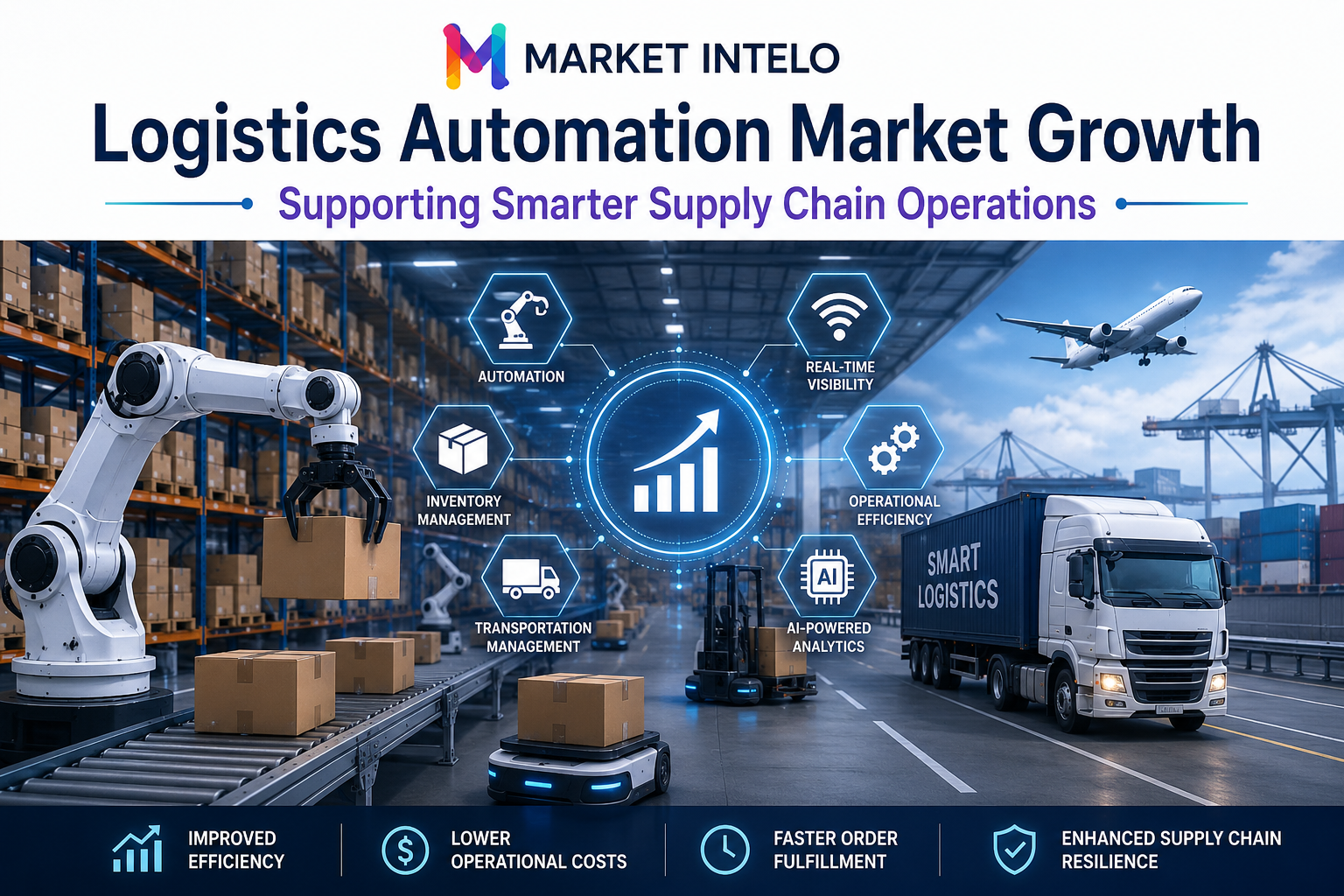
The logistics industry around the world is going through a major shift as the businesses try to ensure more productivity, lower their operational costs, and satisfy the increasing expectations of customers. Thanks to logistic automation, which allows businesses to employ cutting-edge solutions that include the newest technologies such as AI (artificial intelligence), robotics, and data analytics, supply chain operations have been changed significantly.
The global logistics automation market is valued at $74.8 billion in 2025 and is projected to reach $197.3 billion by 2034, expanding at a compound annual growth rate (CAGR) of 13.2% throughout the forecast period 2026-2034.
Market Overview
The logistics automation industry is experiencing significant growth as a result of the growing demand for efficiency and agility in supply chains. The technologies for automating our processes are being adopted in warehousing, transportation, and inventory management. Everything is being automated from AGVs to robotic picking systems and smart sorting solutions. Moreover, the increased popularity of e-commerce and omnichannel distribution models has created the need for scalable logistics solutions.
Key Growth Drivers
1. Increase in Demand for E-commerce
E-commerce demand has grown tremendously, leading to a significant increase in the volume of orders and delivery expectations. Automation provides support to companies to keep pace with this trend by improving and speeding up order fulfillment processes.
2. Employment Scarcity and Cost Problems
There are areas of the world where logistics has experienced labor shortages. Automation allows for a reduction of reliance on human labor while mitigating mistakes and reducing costs.
3. Requirement for Real-Time Visibility
Today’s supply chains have to perform real-time tracking and monitoring. Automated processes using IoT technologies and analytical solutions enable comprehensive visibility of operations and help make better decisions.
4. Developments in Technologies
Technological developments, including innovations in artificial intelligence, machine learning, and robotics, have helped improve logistics automation systems. The aforementioned technologies facilitate predictive maintenance, route optimization, and smart inventory management..
Key Technologies Transforming Logistics
- Robotic Process Automation (RPA): Automates processes such as ordering and documents
- Autonomous Mobile Robots (AMRs): Assist in increasing the efficiency of the warehouse by performing tasks related to movement of materials
- Artificial Intelligence and Machine Learning: Allow predicting demand and making forecasts
- Internet of Things (IoT): Tracks goods in real-time
- Automated Storage and Retrieval Systems (AS/RS): Make use of space and control of inventory.t
Opportunities in the Market
Growth in Emerging Nations
Emerging economies are using automation solutions for improving their logistics systems. This creates large opportunities for service providers.
Integration with Intelligent Systems
The rise of smart warehouses and connected logistical supply chains provides new opportunities for automation technologies. Cloud computing and digital systems offer greater scalability and flexibility.
Sustainability and Eco-Friendly Logistics
Automation can help with energy saving and waste reduction. Better route planning and resource use can lead to sustainable logistics.
Challenges and Restraints
Considerable Upfront Expenditure
The introduction of automation technology calls for a large financial expenditure which can jeopardize the operations of SMEs.
Integration Difficulties
Merging the new automation equipment with the already established systems can prove complicated and time-consuming.
Threat of Cyber Crime
The digitization of supply chain processes has resulted in an increased threat of cyber crime, necessitating the need for strong safety measures.
Future Outlook
The rise of logistics automation depends on the development of smart supply chains. As technology in artificial intelligence (AI), robotics, and data analytics advances, the contribution of automation in increasing operational efficiency and reliability continues to grow. Players in the logistics sector are more capable of coping with the changes in the market and ensuring customer satisfaction thanks to the use of new technologies.
Conclusion
In the present competitive environment, logistics automation should not be malevolently looked upon as a luxury but rather as a requirement. As the businesses emerge in competition to improve their operational efficiency, making good use of automation solutions is proving to be an effective tool. Even though there are certain hurdles such as high cost and difficulty of integration, the advantages of effectiveness, accuracy, and flexibility available due to automation would prevail over the premium of the implementation of automation technologies.