Agriculture is vital to India’s economy and to securing the global food supply. It sustains millions of farmers and rural families. While traditional knowledge remains significant, farmers now face new challenges, including erratic weather, water scarcity, soil degradation, rising costs, and fluctuating market conditions.
Farming’s future depends on smarter and data-driven methods. Technology now plays a key role in increasing productivity, conserving resources, and strengthening agriculture. CropSense bridges the gap between traditional farming and digital innovation.
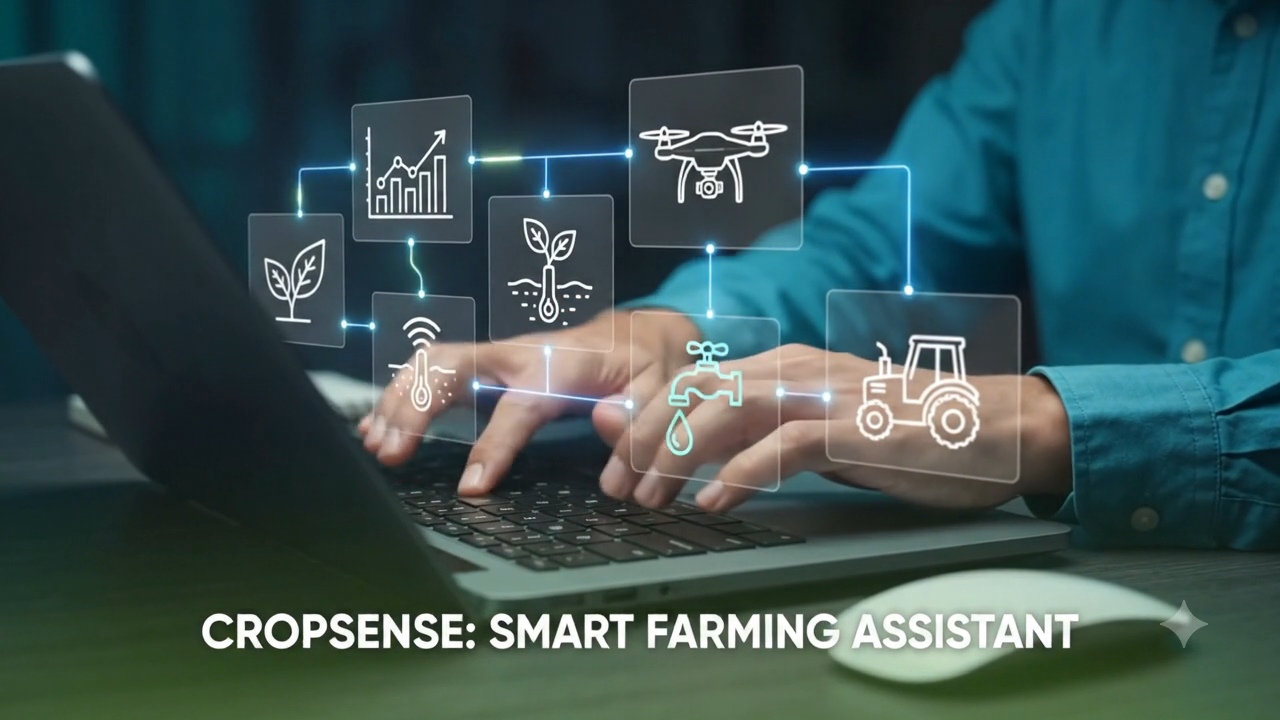
Building on these developments, CropSense combines IoT sensors, cloud computing, predictive analytics, and machine learning to create a smart, connected farming system. This platform demonstrates how technology can address challenges in rural farming and help farmers work more efficiently. By offering real-time monitoring and data-driven advice, CropSense enables farmers to make better decisions rather than relying solely on guesswork.
One example of this impact is addressing a major challenge in traditional farming: the lack of accurate field information. Farmers often decide when to water, fertilise, or manage pests by looking at their crops or following set routines. This can waste resources, lower yields, and raise costs. CropSense addresses this by continuously tracking key factors, including soil moisture, humidity, temperature, sunlight, and nutrients. It processes this data instantly, so farmers can clearly see what’s happening and act quickly when needed.
Managing water is a big challenge in today’s farming. Using too much water for irrigation depletes groundwater and reduces crop efficiency, underscoring the importance of using water wisely. CropSense provides smart irrigation advice based on soil moisture and weather conditions. This helps farmers water their crops only when needed, saving water, cutting costs, and helping the environment.
Fertiliser optimisation is another important area where CropSense delivers value. Using too much or the wrong kind of fertiliser can harm soil, pollute water, raise costs, and hurt long-term farming. CropSense checks soil nutrient levels and provides specific fertiliser advice for each crop, helping farmers use the right amount at the right time. This keeps soil healthy, saves money, protects the environment, and boosts productivity over time. CropSense also provides predictive alerts based on weather forecasting and analytics, enabling farmers to take preventive action and better manage risk.
Machine learning in farming highlights the shift toward data-driven decisions. Tools like data analysis and automation are changing farms everywhere. CropSense proves that these technologies can be practical and easy to use for all farmers. Learning from past and current data helps farmers use resources better and grow more crops.
Another reason for CropSense’s potential impact is its ease of use. Many high-tech farming tools don’t catch on because they’re too costly or complicated, especially for rural farmers. CropSense, however, is built to be simple, practical, and welcoming for everyone. Its mobile and web apps are easy to use, even for those with little tech experience. Features such as clear dashboards, visual cues, support for multiple languages, and a simple design make it accessible to all kinds of farmers.
This focus on accessibility is particularly important in Indian farming, where many farmers have small plots and limited resources. These farmers often can’t afford new technology or don’t have access to it. CropSense can help by making advanced farming tools available to more rural communities. This can boost rural economies, make farming more efficient, and help close the gap between big commercial farms and small family farms.
Expanding beyond India, smart farming technology is also becoming more important globally as countries work toward food security, sustainability, and climate resilience. With populations growing, food demand will rise, but there’s limited land, less water, and more environmental stress. This means we need to grow more food without using more resources. Tools like CropSense help by making farming more efficient, cutting waste, improving monitoring, and boosting crop yields.
CropSense also fits within a broader digital shift across many industries. Like logistics, manufacturing, healthcare, and retail, farming is now using automation, connectivity, AI, and real-time data. Tools like sensors, forecasts, remote monitoring, and precision farming are now key to modern agriculture. CropSense offers a practical way to bring these technologies into everyday farming in a way that can grow and last.
Along with driving efficiency, another big benefit of CropSense is helping farmers manage risks. Farming is always uncertain because of weather, market changes, and pests or diseases. Now, digital tools help farmers better manage these risks. With constant monitoring, early warnings, and useful advice, CropSense helps farmers move from reacting to problems to preventing them. This gives farmers more control, helps them make better decisions, and supports long-term stability.
Ultimately, CropSense shows what the future of smart farming looks like by bringing together IoT, cloud computing, machine learning, data analysis, and user-friendly design. With this broad approach, it tackles many big farming challenges at once. CropSense improves water use, fertiliser management, crop monitoring, and productivity, while providing farmers with real-time insights and better decision-making tools.
As agriculture evolves due to climate change, resource limits, and food demand, smart systems like CropSense will shape sustainable farming. Using these technologies can boost crop yields, improve lives, and support a more food-secure future