Detailed Review
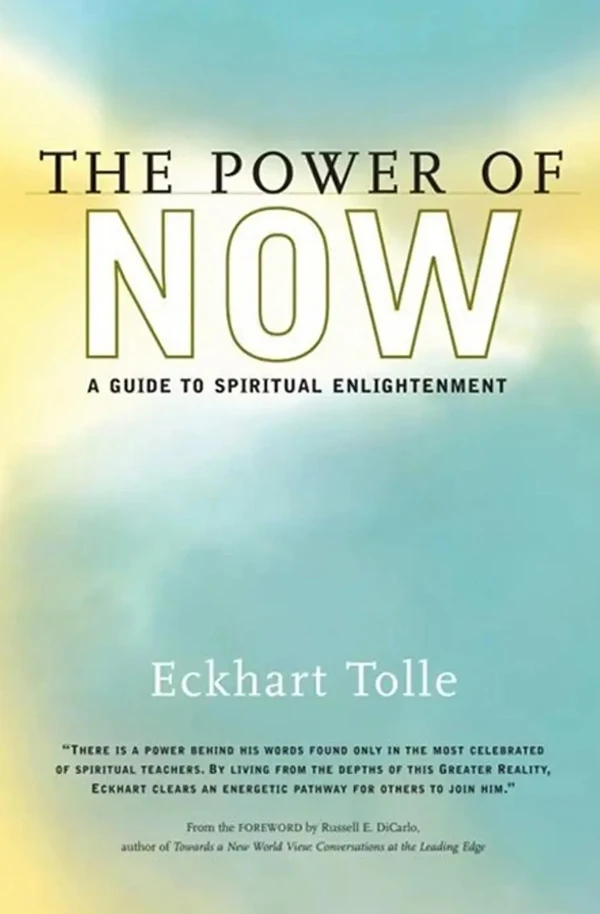
In a world that constantly pushes us toward productivity, ambition, and endless planning, one book quietly challenges the entire premise of how we live our lives. The Power of Now by Eckhart Tolle is not just a spiritual book. It is a guide to understanding the nature of our thoughts, our emotions, and the deeper awareness behind them.
Since its release in 1997, the book has sold more than ten million copies worldwide and has been translated into over thirty languages. Its influence continues to grow because it addresses a universal challenge. Most people live trapped in the past or worried about the future, while life itself unfolds only in the present moment.
This book explores a powerful yet simple question. What would happen if we truly learned to live in the present?
What The Power of Now Is About
At its core, The Power of Now presents a profound idea. Human suffering is largely created by the mind’s constant attachment to past experiences and future anxieties.
According to Tolle, our thoughts are not the problem. The problem begins when we start identifying with those thoughts. When the mind becomes the center of identity, people become trapped in endless cycles of worry, comparison, fear, and dissatisfaction.
Tolle introduces the concept of the “pain body”. This is the accumulated emotional pain that individuals carry from past experiences. When triggered, it feeds on negative thinking and emotional reactions. The more unconscious we are of it, the stronger its influence becomes.
The solution proposed in the book is not complex. It is awareness.
By observing thoughts instead of becoming those thoughts, individuals create space between themselves and their mental patterns. This awareness opens the door to what Tolle describes as a deeper state of being.
The Unique Structure of the Book
One of the most interesting aspects of the book is its conversational format.
Rather than presenting ideas through traditional chapters alone, the book unfolds as a dialogue between Tolle and an imagined reader asking questions. This structure mirrors the doubts and curiosities that many readers naturally experience.
As a result, complex spiritual ideas become easier to understand and apply. Readers often feel as though their own questions are being answered directly within the text.
This style also encourages reflection rather than passive reading.
Key Lessons from The Power of Now
1. The Present Moment Is the Only Reality
Most psychological stress originates from dwelling on past regrets or worrying about future outcomes. However, the only moment we can truly experience is the present one.
When attention returns to the present moment, mental clutter begins to fade, and clarity emerges.
2. You Are Not Your Mind
One of the most powerful insights in the book is the separation between awareness and thought.
Thoughts constantly appear in the mind, but awareness is the silent observer behind them. Recognising this difference creates freedom from compulsive thinking.
3. The Ego Thrives on Comparison and Conflict
The ego constantly builds identity through external validation, competition, and fear of loss. When individuals become aware of this process, the ego’s control weakens.
Awareness dissolves unconscious reactions and replaces them with conscious presence.
4. Acceptance Unlocks Energy
Acceptance does not mean passivity. Instead, it removes resistance to the present moment.
When resistance disappears, energy becomes available for meaningful action and clearer decision-making.
5. Spiritual Awakening Happens in Everyday Moments
Tolle emphasises that awakening is not reserved for monks or spiritual retreats.
It can occur in simple moments such as breathing consciously, listening deeply, walking quietly, or observing thoughts without judgment.
These small shifts gradually transform one’s relationship with life.
Strengths of The Power of Now
The book’s greatest strength lies in its universality. Its message applies to people across cultures, professions, and belief systems.
Another advantage is its simplicity. Tolle communicates deep philosophical ideas using clear and accessible language.
Readers struggling with anxiety, overthinking, or emotional stress often find the book deeply calming. The concepts are simple enough to understand yet profound enough to trigger lasting reflection.
The book also successfully bridges Eastern spiritual insights with Western readers without sounding overly academic or doctrinal.
Limitations of the Book
However, the book is not without limitations.
Certain ideas are repeated throughout the chapters, which some readers may find unnecessary. In addition, the book does not offer a structured step by step framework for applying the concepts.
Readers who prefer action-oriented self-improvement books may initially feel that the approach is too abstract.
However, the intention of the book is experiential rather than instructional. Its purpose is to shift awareness rather than provide rigid techniques.
Who Should Read This Book
The Power of Now is ideal for readers interested in mindfulness, meditation, spiritual growth, or emotional clarity.
It is especially helpful for individuals who feel overwhelmed by constant mental chatter, stress, or anxiety.
Leaders, entrepreneurs, and professionals may also benefit from the book’s core insight. Clear thinking often emerges not from more analysis, but from greater awareness.
When the mind becomes quieter, decisions become clearer.
Final Verdict
Few books manage to influence both spiritual seekers and mainstream readers across generations. The Power of Now is one of those rare works.
Its teachings are simple, yet their impact can be profound when practised consistently.
However, the value of this book depends entirely on the reader’s willingness to apply its message. Reading it quickly may offer intellectual understanding, but practising its ideas slowly reveals its true depth.
For anyone seeking greater clarity, awareness, and peace of mind, this book remains an essential read.
Final Rating: 8.5 / 10
A timeless guide for rediscovering the power of living fully in the present moment.