Detailed Review
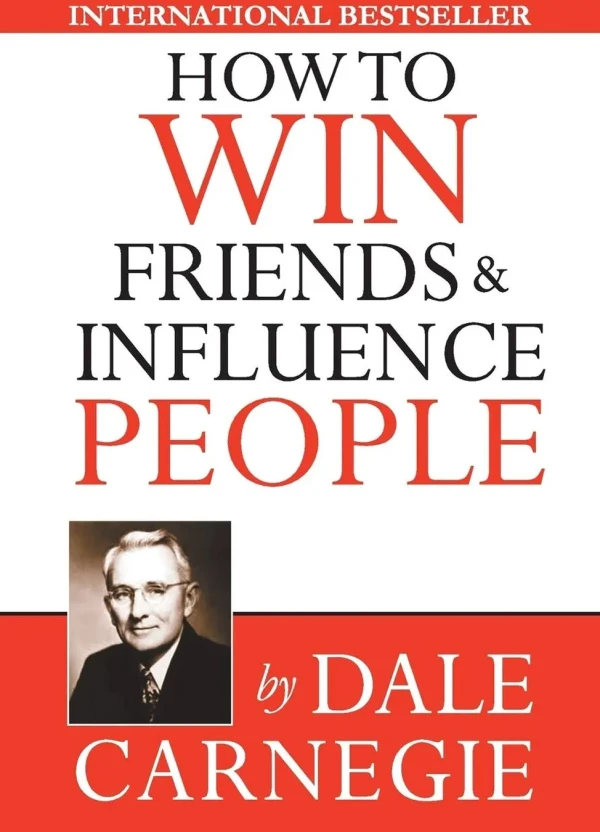
How to Win Friends and Influence People: An Enduring Guide to Human Leadership
Few business books endure shifts in generations, technology, economic cycles, and leadership trends. Yet, How to Win Friends and Influence People remains among the most influential works on communication, leadership, persuasion, and human behaviour.
First published in 1936, the book distils a powerful yet simple truth: Business success is fundamentally driven by people, not just processes.
In a world dominated by AI, automation, analytics, and digital transformation, Dale Carnegie’s work is increasingly relevant. While industries evolve, human psychology remains largely unchanged.
Successful leaders are not always the most intelligent. Often, they are those who make others feel valued, respected, understood, and motivated.
This enduring power bridges the book’s timeless relevance with the evolving challenges leaders face today, making its foundational insight even more significant in the current landscape.
The Central Idea
Carnegie builds his philosophy on a clear principle: People respond more positively to appreciation than criticism. This idea is the book’s central focus.
The book teaches that influence is rarely achieved through authority, aggression, or intellectual superiority. Instead, it is built through empathy, listening, sincerity, emotional intelligence, and genuine interest in others.
While this may seem obvious, many organizations struggle because leaders focus too much on systems and neglect relationships.
Carnegie identified this essential truth almost a century ago, long before it became a leadership staple.
He recognised that in any context—sales, leadership, politics, negotiation, customer management, or personal relationships—people fundamentally seek three things:
- Recognition
- Respect
- Relevance
The book offers practical frameworks to strengthen interpersonal connections and reduce conflict and resistance.
Why This Book Matters More Today Than Ever
Modern organisations face a silent leadership crisis. Despite investment in technology, transformation initiatives, and performance systems, many companies continue to struggle with:
- Employee disengagement
- Poor collaboration
- Leadership disconnect
- Customer distrust
- Cultural fragmentation
- High attrition
- Weak stakeholder alignment
As these challenges persist, it becomes clear that the root cause often lies deeper than strategy—at the core, it is human behaviour that drives outcomes.
This core insight highlights the impetus for effective leadership: understanding human behaviour.
Executives now operate in complex ecosystems involving customers, regulators, vendors, employees, investors, governments, and digital communities. In this environment, technical competence alone is insufficient.
Ethical influence has become a strategic advantage.
At this intersection of complexity and human dynamics, Carnegie’s insights reveal their operational value.
His principles apply directly to:
- Leadership communication
- Sales and negotiation
- Client management
- Change management
- Organizational culture
- Team alignment
- Stakeholder engagement
- Conflict resolution
In logistics and supply chain ecosystems, where coordination among stakeholders determines execution quality, the lessons from this book are highly actionable.
A transport leader who understands people often solves problems more quickly than one focused solely on systems.
The Most Powerful Lessons from the Book
1. Criticism Creates Resistance, Not Transformation
Carnegie shows criticism usually invites resistance and blocks growth, while encouragement leads to genuine change. The key lesson: Criticism fosters defensiveness; encouragement inspires improvement.
Most individuals instinctively defend themselves when attacked, even when the criticism is justified.
This insight is extremely relevant in corporate leadership today.
Performance pressure is often mistaken for accountability, but too much criticism creates fear and disengagement rather than true ownership.
Modern leadership increasingly requires coaching rather than commanding. Effective leaders correct without humiliating.
2. Appreciation Is a Leadership Multiplier
Sincere appreciation energises teams and boosts performance. The key lesson: Honest gratitude increases effort and motivation.
People do their best when they feel recognised and valued.
This lesson is often overlooked in corporate environments, where appreciation is replaced by transactional KPIs.
Organisations invest heavily in engagement programs, but often ignore one of the most cost-effective leadership tools:
Sincere recognition.
A motivated workforce is rarely built solely through compensation. It is built through meaning, respect, trust, and acknowledgement.
3. Listening Is More Influential Than Talking
Listening builds true influence—understanding matters more than dominating. The key lesson: Real influence comes from listening, not from talking.
People tend to listen to reply rather than to understand, and are drawn to those who make them feel heard.
This principle transforms leadership, negotiation, customer relationships, and business development.
Executives who dominate conversations often miss valuable information.
Executives who listen deeply gain critical insights.
In today’s complex stakeholder environment, listening is a strategic capability. Similarly, when it comes to influence, people buy on emotion before they turn to logic.
People decide emotionally before logically; emotional connection is more persuasive. The key lesson: Emotional bonds win influence before rational arguments do.
People justify their choices with logic, but typically decide first on the basis of feelings.
This applies to:
- Customer acquisition
- Leadership influence
- Employee engagement
- Political communication
- Brand trust
- Change management
Organisations that ignore emotional dynamics often struggle despite strong operational logic. For instance, companies attempting change initiatives without considering employee concerns frequently face low adoption rates, even when the change is logically beneficial.
This dynamic explains why technically sound strategies often fail in execution.
The Hidden Executive Lesson
Many readers view this book as a personal development guide.
However, this perspective only covers part of the book's value.
At a deeper level, the book is about power.
It addresses not only hierarchical power but also focuses on relational power.
Specifically, relational power enables influence without coercion, crucial in today's decentralised, collaboration-driven business environment.
It is about relational power.
Specifically, it is the ability to influence without coercion. This distinction is critical in today’s decentralised business environment, where authority structures are becoming flatter and collaboration-driven ecosystems are replacing command-and-control leadership.
Future-ready leaders will succeed through influence rather than instruction.
Carnegie anticipated this leadership shift decades before it became mainstream management theory.
Where the Book Feels Dated
Certain examples and social contexts reflect the era in which the book was written.
Some anecdotes are repetitive or overly simplistic, given modern realities.
The book also sometimes underestimates the role of structural incentives, institutional politics, and systemic complexity in shaping behaviour.
Not every conflict can be resolved solely through kindness and empathy. Imitations do not weaken the core philosophy.
If anything, these dated aspects highlight the timelessness of the foundational principles, even as business environments change.
Final Verdict
How to Win Friends and Influence People is more than a communication book. It serves as a leadership operating manual, presented as a self-help classic. Its enduring relevance stems from one important truth:
Organisations advance not through strategy documents alone, but through human relationships. Technology can optimise systems. Capital can scale operations. Processes can improve efficiency. However, influence remains deeply human.
For executives, entrepreneurs, policymakers, sales leaders, logistics professionals, and organisational builders, this book provides a timeless reminder:
People support leaders who make them feel valued and understood.
While the lesson is longstanding, its relevance persists.
This lesson grows more essential each year.
Rating
9.3/10
A masterclass on leadership and human psychology. Some dated examples, but the core principles remain essential for today's leaders.