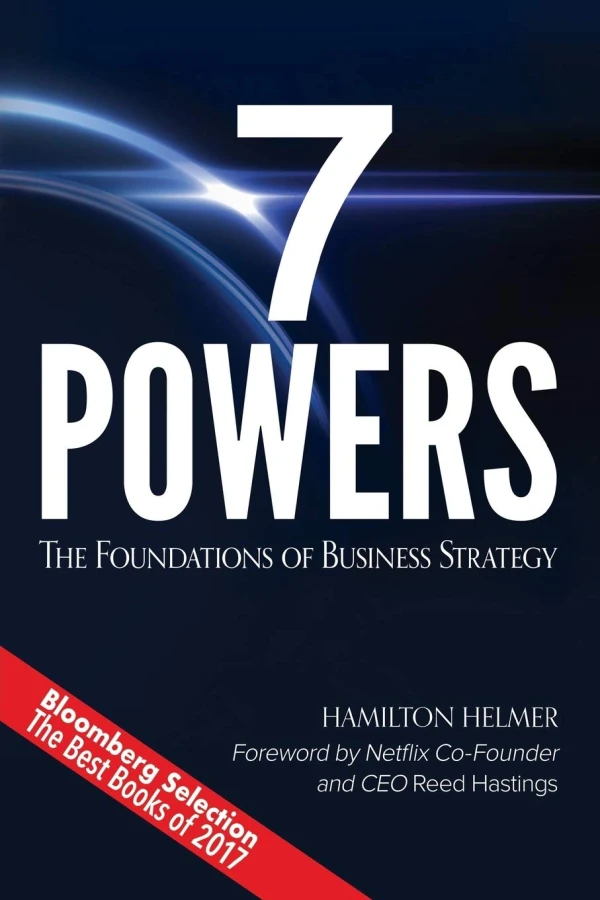
Detailed Review
Launching a new product may feel like a finish line, but it is just the beginning. Early wins can lead to complacency; sustaining long-term business strength requires more. Hamilton Helmer, in "7 Powers: The Foundations of Business Strategy," distils essential elements for enduring growth and success, offering practical, actionable strategic advice.
Helmer’s message is clear: long-term business advantage comes from building defences that competitors cannot easily replicate. He guides leaders to prioritise what is truly effective, even if it lacks immediate appeal. This pragmatic guidance is foundational for my own leadership approach.
Key Insights from the Book
Helmer calls major advantages “powers” and names seven. Instead of just listing them, he shares relatable examples. For example, economies of scale mean the bigger you get, the less it costs to serve each customer. I’ve seen this in action at companies I’ve worked with.
Network economies: Products gain value as more people use them, such as social platforms.
Counter-positioning: Newcomers disrupt by acting differently, as Netflix did by moving to streaming.
Switching costs: High inconvenience or expense keeps customers loyal, as with Apple devices.
Branding: A strong brand earns loyalty and allows premium pricing, as with Coca-Cola.
Cornered resource: Patents or exclusive deals, like De Beers' diamond control, provide an edge.
Process power: Hard-to-copy know-how or systems, such as Toyota’s lean methods, provide an advantage.
Real-World Examples
These powers are exemplified by well-known companies:
- Amazon leverages economies of scale in logistics and cloud computing.
- Facebook and WhatsApp are classic examples of network economies.
- Netflix’s shift from DVD rental to streaming is a case of counter-positioning.
- Apple’s ecosystem creates high switching costs for users.
- Coca-Cola’s branding is legendary, making it almost synonymous with cola worldwide.
- De Beers cornered the diamond market through exclusive control over resources.
- Toyota’s lean manufacturing exemplifies process power.
Practical Applications and Relevance
Apply lessons from "7 Powers" by identifying the powers your business has and those it lacks. Focus on the new powers that best fit your business model. Set clear goals to strengthen capabilities, such as negotiating vendor rates or improving customer integration. Review progress often and adjust based on results.
- Scale economies apply to fleet operations, where larger networks can negotiate better rates and optimise routes.
- Switching costs arise from long-term contracts, proprietary integrations, or custom logistics solutions that tie customers to a provider.
- Process power is evident in highly optimised logistics systems, such as those at FedEx and UPS, where years of refinement create advantages difficult to replicate.
Startup founders and new businesses should map product features to the seven powers. Identify which powers apply. Brainstorm ways to build or strengthen them, like network effects or switching costs. Regularly review competitive risks and adjust your roadmap as needed.
Depth and Simplicity
Helmer communicates complex concepts with simplicity and relevance. His real-world examples minimise jargon and make strategic principles accessible to all decision-makers, regardless of experience in business strategy.
What Makes This Book Valuable
This book stands out for clarity and depth. Helmer removes complexity and turns core principles into a simple decision tool. Leaders can use the seven powers as a checklist for sustaining advantage.
Helmer asserts that securing at least one power is a non-negotiable for long-term success. Without defensibility, advantage quickly fades. This is especially pertinent for technology and startup founders, who often prioritise short-term growth over strategic resilience.
My Take (Executive View)
"7 Powers" serves as both a strategic framework and a leadership benchmark. Helmer challenges leaders to address core drivers of sustained performance. Integrating his model into leadership meetings has generated candid, high-impact strategic discussions.
Leaders at all stages benefit from this practical guidance. Use the seven powers as a framework for strategic assessment and improvement. Conduct candid evaluations against Helmer’s principles and establish a disciplined process to monitor progress.
This book serves business leaders seeking robust competitive strategies.
- It is particularly relevant for startup founders who prioritise strategic durability over short-term metrics.
- Supply chain and logistics executives gain actionable insights for sustainable advantage.
- Strategy consultants and MBA candidates gain a rigorous, actionable analytical framework.
Final Rating: ⭐⭐⭐⭐☆ (4.5/5)
To extract value from "7 Powers," regularly engage teams in structured reviews of each power. Assess organisational strengths, identify development areas, and create action plans. Maintain adaptability and vigilance to ensure ongoing strategic relevance